This week, markets once again reacted less to economic data and more to policy headlines. Political noise has been driving short-term price action. A familiar pattern played out, similar to what we saw at the start of last year: escalation followed by rapid de-escalation. The major headlines centered on President Trump’s negotiations involving Greenland. He renewed tariff threats aimed at NATO members, which initially pushed equities lower by around 2%. Once the administration announced a “framework for a future deal” and walked back the tariff threats, markets recovered quickly. The result was extreme volatility, with prices overshooting to the downside followed by a steep recovery. Normally, a calendar year change does not come with this kind of violent market adjustment, but politics have clearly taken over. In some areas, markets are starting to break.
Few would have predicted that energy would be the leading sector coming out of December 31st. The Energy Select Sector SPDR ETF (XLE) is already up about 10% this year. I’d attribute roughly half of that move to President Trump’s policy direction and the other half to forces completely outside of politics. On Wednesday, natural gas surged nearly 20% in a single day. That move was not driven by tariffs or negotiations, but by extreme winter weather across large parts of the U.S. A combination of colder-than-expected temperatures, elevated heating demand, and supply constraints pushed prices sharply higher. This is a reminder that not all volatility is political. Some of it is simply supply and demand colliding in real time.
That said, moves of this magnitude rarely end well in the short term. Prices can fall just as fast as they rise, and natural gas is now capable of swinging 10% in either direction on any given day. Weather-driven spikes tend to normalize, but when they occur alongside policy uncertainty and tight inventories, they add fuel to an already volatile market.
President Trump’s policies are signaling to the world that critical minerals and energy resources are now national security assets. Greenland was never about military bases—the U.S. already has that access. The objective was always minerals. Rare earths, energy, and strategic resources are now being treated less like commodities and more like leverage.
David Rubenstein, the legendary investor and chairman of the Carlyle Group, put it bluntly in an interview following Trump’s speech at the World Economic Forum. “When Trump is doing things, you have to follow the money,” he said. “There’s going to be a lot of minerals—rare earths, gold, copper, whatever might be coming out of Greenland—if you have the right to exploit it.” That framing matters.
Currency Devaluation and the Commodity Super-Cycle
Since President Trump took office in January 2025, the U.S. Dollar Index has fallen roughly 10–11%. That is an enormous move for a major global currency in just one year. In a volatile year, the dollar might move 4–5%. This decline has been accompanied by rising prices in cryptocurrencies and physical commodities. Vaults in London and Shanghai have reportedly seen silver inventories fall to multi-decade lows. There is a physical shortage of silver, which triggered panic buying and violent short covering. Silver prices are up roughly 40% to start the year, with daily moves of 5% now becoming common. This reflects a broader erosion of confidence in paper currency.
Ironically, the company most exposed to this dynamic may be Berkshire Hathaway. It holds close to $380 billion in cash. In an environment where the dollar is losing value, cash has quietly become more of a liability than an asset. Bonds have not provided protection either, and the risk of owning them is now higher than it was last year. Apple, another cash-heavy company, is down roughly 9% to start the year. Many large-cap stocks have lagged badly as the commodity super-cycle has taken hold.
Markets today cannot be viewed purely through a traditional fundamental lens. Valuations still matter, but supply and demand are now driving price behavior to extremes. Technology stocks have avoided even larger declines largely because of shortages in chips and memory tied to the massive data-center buildout. That shortage was accelerated by Trump’s trade war with China. China controlled the rare earths. The U.S. lacked the infrastructure to decouple quickly. Add in rising geopolitical risk around Taiwan, where much of the world’s chip production resides, and the response has been a rapid acceleration of domestic chip manufacturing. The result, for now, is scarcity.
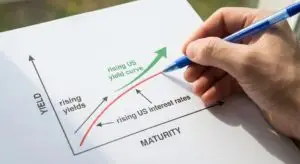
The same supply-demand dynamic is playing out across commodities. Fast money attracts fast money. Gold, silver, copper, platinum, uranium—these are becoming the “tech stocks” of 2025. Energy is now a national security issue, and uranium is already up about 10% this year. These narratives can change just as quickly as they form. Many of these forces are inflationary, and I would expect Trump’s economic advisers are well aware of that risk. It’s not hard to envision scenarios where interest rates spike if this continues.
Today, we are dealing with multiple panics happening at once. There is an industrial panic tied to chips and silver. There is an energy panic tied to uranium and natural gas. And there is a monetary panic, with gold acting as a hedge against dollar weakness. As long as these shortages persist, capital will continue rotating out of paper assets and into physical and strategic ones. If the pace accelerates further, inflation risks rise sharply.
For portfolios, this environment reinforces the importance of discipline. Reacting to every escalation headline increases risk without improving outcomes. The larger trend remains intact, which is a structural shift toward resource security, domestic industrial capacity, and technology infrastructure. Staying diversified, maintaining exposure to high-quality assets, and maintaining a long-term perspective remains the most effective way to navigate headline-driven markets.
At the same time, not every market environment rewards traditional portfolios, and this is clearly one of those periods to start the year. Conventional value strategies and balanced allocations are not being rewarded right now. That can make it feel like you’re standing on the sidelines, waiting for conditions to normalize, and in many ways that’s exactly the type of environment we’re in.
That doesn’t mean portfolios are broken or that long term strategies have stopped working. Periods like this tend to be transitional, not permanent. Excesses eventually correct, supply catches up with demand, and markets refocus on fundamentals. Long term averages matter precisely because shock periods like this occur. Markets rarely move in straight lines, and returns are built over full cycles, not isolated moments of stress. Compounding works over time by staying invested through both calm and chaotic periods. The goal during these stretches isn’t to chase what’s working in the moment, but to remain positioned so portfolios can benefit when the environment shifts again as it always does. These imbalances are what create mispricings, which ultimately lead to opportunities to identify undervalued assets when distortions emerge.
Have a great weekend!
Sources & Key Data Points
The Guardian (Jan 24, 2026): “Trump declaration of Greenland framework deal met with scepticism amid tariff relief” — Confirmed details surrounding the announced “framework for a future deal” and the withdrawal of proposed tariff threats against NATO members.
PBS / War.gov (Jan 3, 2026): “Trump Announces U.S. Military’s Capture of Maduro; Operation Absolute Resolve” — Provided context for the elevated geopolitical risk premium and reinforced market perceptions around executive leverage.
SCOTUSblog (Jan 21, 2026): “Supreme Court appears inclined to prevent Trump from firing Fed governor” — Covered oral arguments in Trump v. Cook, highlighting skepticism regarding at-will removal of Federal Reserve Governors.
The Motley Fool (Jan 22, 2026): “Why Meta Platforms Rallied Over 5% Today” — Verified the Jefferies analyst note, valuation commentary, and AI investment thesis driving the stock’s rebound.
Disclaimer
The views expressed here are those of the author as of January 10, 2026, and are subject to change without notice. This material is for informational purposes only and does not constitute a recommendation to buy or sell any specific security. Past performance is not a guarantee of future results. All investing involves risk, including the potential loss of principal. The information presented here is for informational purposes only, and this document is not to be construed as an offer to sell, or the solicitation of an offer to buy, securities. Constant Guidance Financial is not an accounting firm or legal firm; no portion of this content should be construed as legal or accounting advice. Some investments are not suitable for all investors, and there can be no assurance that any investment strategy will be successful. Charts, graphs, and visual illustrations are provided for educational purposes only and should not be relied upon as accurate representations of current market data.
The hyperlinks included in this message provide direct access to other Internet resources, including Web sites. While we believe this information to be from reliable sources, Constant Guidance Financial is not responsible for the accuracy or content of information contained in these sites.
Although we make every effort to ensure these links are accurate, up to date and relevant, we cannot take responsibility for pages maintained by external providers. The views expressed by these external providers on their own Web pages or on external sites they link to are not necessarily those of Constant Guidance Financial.