This week, I wanted to start with a reminder that I write these updates strictly from a market perspective. During times of war that can sometimes feel a bit tasteless, especially when there is a real human cost involved and soldiers have lost their lives while I’m discussing how markets react and how investors can preserve or grow their capital. The politics surrounding this conflict are also all over the place depending on where people get their news. I try to listen to a wide range of sources, but there has been a tremendous amount of misinformation circulating, especially now that artificial intelligence can generate very convincing fake stories and images.
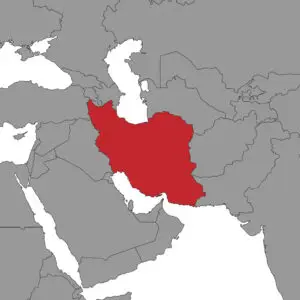
From a market perspective, the major driver this week has been the escalation of tensions with Iran and the potential disruption of global oil supplies. Iran’s strategy has been to target oil production and, more importantly, threaten the flow of crude through the Strait of Hormuz. That narrow channel is one of the most critical energy choke points in the world, with roughly 20 million barrels of oil per day moving through it. Even the threat of disruption there has sent shockwaves through global energy markets.
The major market indices, in my estimation, are currently down roughly 3%–4% because of the uncertainty. Many investors have reduced risk for the moment but would likely step back in quickly if there were a truce. The downside we are seeing today is not much different from what happened around this time last year when President Trump imposed tariffs. At that time, the prevailing view was that the tariffs would trigger a global recession and push interest rates sharply higher. His pain point ended up being the 10-year Treasury yield moving toward roughly 4.50%. Once tariffs were reduced, the market not only recovered the losses but went on to make new highs as the AI investment cycle began to accelerate and buying returned.
From a trader’s perspective, this situation is not very different. The downside risk, if the conflict continues, would be the potential for a global recession driven by higher energy prices. The upside scenario would be similar to last year, when the president changes course and markets respond quickly. Those announcements often come on a Sunday night before markets open for the week. I’m sure he will be monitoring the situation closely, just as he did during the tariff negotiations.
The off-ramp this time is fairly clear. It could be something as simple as an announcement that Iran’s nuclear threat has been neutralized or that its military capabilities have been significantly weakened. Even a temporary truce combined with diplomatic negotiations could be enough to calm markets. A negotiated agreement where Iran halts its nuclear program would likely be the cleanest outcome, although it is also the most difficult path. Israel appears to be pushing for broader regime change, which would take much longer to achieve, and time may not be on their side.
In the meantime, policymakers have attempted to buy time. The United States released roughly 130 million barrels from the Strategic Petroleum Reserve while also allowing the purchase of about 110 million barrels of Russian oil by temporarily easing sanctions. These moves were intended to stabilize global supply and prevent energy shortages from turning into a broader economic shock. Iran, meanwhile, continues shipping oil to China, which has largely stayed out of the conflict.
Looking ahead, the futures market provides an important signal. West Texas Intermediate crude trading one year from now is priced around $72 per barrel. Even the energy market itself does not appear to be pricing in a prolonged war. Over the past several days, stocks have traded almost in lockstep with oil prices. When oil spikes higher, markets begin worrying about inflation and slower economic growth. When oil pulls back, equities stabilize.
At some point there will likely be a relief rally similar to what happened when markets bottomed about a week after the tariff shock last year. The real question is simply timing. If negotiations begin, markets could rebound quickly. For now, the president appears to be buying time by suggesting the conflict may be close to ending while avoiding any firm deadline or clearly defined objective. That approach leaves him multiple ways to exit the conflict if he chooses to do so.
What would strengthen his negotiating position is if oil prices began to move lower, interest rates stabilized, and Iran lost some of its leverage as global markets adjusted to the disruption. So far that hasn’t happened yet. If anything has surprised me the most, it is how quickly markets have begun pricing in inflation as if it will be long-lasting. In reality, shocks like this are typically temporary, similar to the supply disruptions during the pandemic and the inflation surge that followed the massive government spending afterward.
This is where the Federal Reserve could also influence the balance of leverage. We will hear from Chairman Powell next week when the Fed meets, which will likely add the usual volatility around their announcements. From a market perspective, a rate cut would ease financial conditions and help reduce some of the pressure from rising oil prices, which in turn could weaken Iran’s negotiating leverage. The Fed will likely emphasize the risk that higher energy prices could push inflation higher and remain cautious until there is more clarity on how long the conflict lasts.
In many ways, the bigger question may be what happens after the conflict ends. Markets tend to have short memories. If stocks recover quickly, this episode may ultimately look like another sharp drop followed by a rapid rebound similar to what we saw last April. That remains the base case, although war always carries the risk of unexpected developments.
For now, equity markets have moved into a cautious wait-and-see mode as investors look for greater clarity around the geopolitical situation. Importantly, the recent declines have been orderly rather than panicked, and several sectors are beginning to approach levels that look technically oversold. As always, once uncertainty begins to fade, investor sentiment can shift just as quickly as it did when the war first broke out.
Have a great weekend!
* U.S. Department of Energy (DOE): Official statement on 172 million barrel Strategic Petroleum Reserve release (March 11, 2026).
* U.S. Department of the Treasury (OFAC): General License No. 44 waiver for ~124 million barrels of Russian crude (March 12, 2026).
* U.S. Energy Information Administration (EIA): Analysis of 20 million barrels per day transiting the Strait of Hormuz.
* NYMEX/ICE Futures: WTI Crude Oil Forward Curve showing 2027 prices anchored at $72.
* Federal Reserve (FRED): 10-Year Treasury Yield tracking toward 4.50% benchmark.
* International Energy Agency (IEA): Special Briefing on Iran-Israel conflict and spare capacity (March 12, 2026).
Disclaimer: The views expressed here are those of the author as of March 14, 2026, and are subject to change without notice. This material is for informational purposes only and does not constitute a recommendation to buy or sell any specific security. Past performance is not a guarantee of future results. All investing involves risk, including the potential loss of principal.The information presented here is for informational purposes only, and this document is not to be construed as an offer to sell, or the solicitation of an offer to buy, securities. Constant Guidance Financial is not an accounting firm or legal firm; no portion of this content should be construed as legal or accounting advice. Some investments are not suitable for all investors, and there can be no assurance that any investment strategy will be successful. Charts, graphs, and visual illustrations are provided for educational purposes only and should not be relied upon as accurate representations of current market data.
The hyperlinks included in this message provide direct access to other Internet resources, including Web sites. While we believe this information to be from reliable sources, Constant Guidance Financial is not responsible for the accuracy or content of information contained in these sites.
Although we make every effort to ensure these links are accurate, up to date and relevant, we cannot take responsibility for pages maintained by external providers. The views expressed by these external providers on their own Web pages or on external sites they link to are not necessarily those of Constant Guidance Financial.